Email Us
News

ASC vs. RE Valves: Which Seal Type Is More Durable?

2026-11-23 0 Leave me a message

Choosing between ASC hard-seal and RE soft-seal one-way throttle valves involves more than comparing sealing materials. The sealing structure affects air tightness, wear resistance, adjustment response, and service life under different operating conditions. In this article, we explain how these two valve designs perform in pneumatic systems, compare their technical characteristics, and share practical selection advice based on OLK's experience in pneumatic component manufacturing since 2003.

Table of Contents

1. How Do ASC and RE Valve Sealing Structures Differ?

In pneumatic flow control, the sealing structure determines how effectively a valve controls airflow and responds to changing operating conditions. When selecting a one-way throttle valve, we recommend looking at the actual working environment rather than focusing on the sealing material alone.

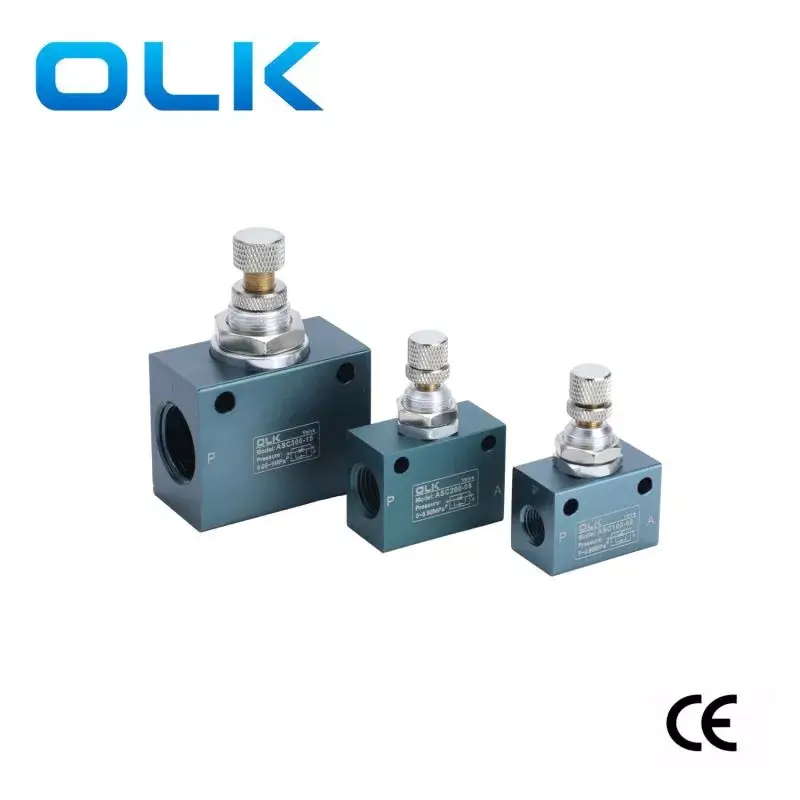
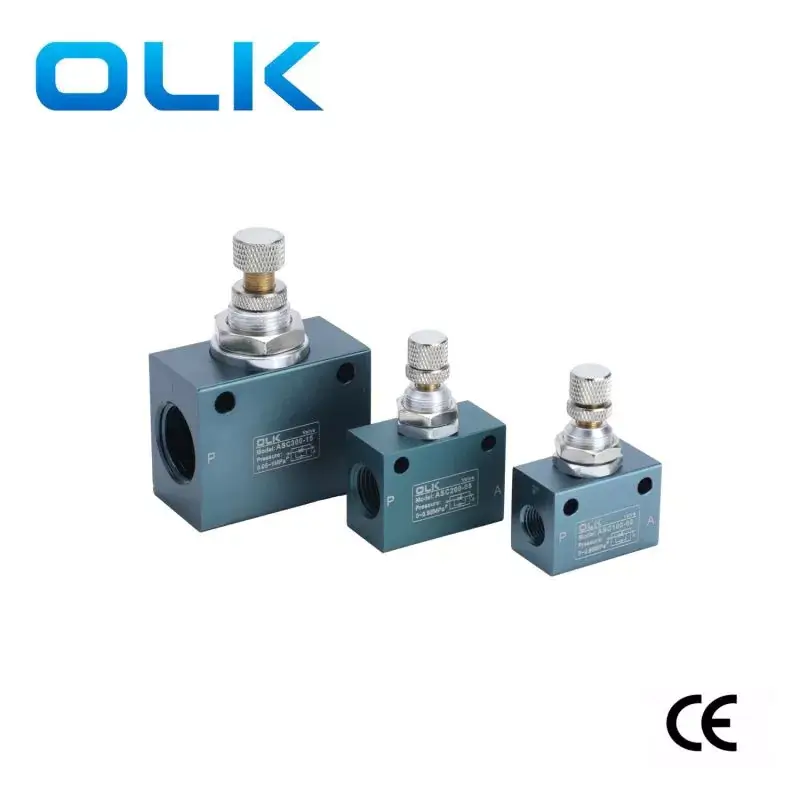
At OLK, we offer two different designs: the ASC Series One-Way Throttle Valve with a metal-to-metal hard seal and the RE Series One-Way Throttle Valve with a rubber-based soft seal. Both designs allow compressed air to pass in one direction while restricting reverse airflow, but their sealing characteristics are different.

ASC Hard Seal: Metal-to-Metal Contact

The ASC valve uses a metal-to-metal sealing structure. Without relying on a rubber sealing element at the hard-sealing interface, this design offers good resistance to mechanical wear, impact, and contamination from oil or small particles.

We generally recommend ASC valves for pneumatic equipment involving frequent operating cycles, industrial machinery, and working environments where long-term mechanical stability is important. The metal sealing structure is less vulnerable to certain problems associated with rubber seal aging or deformation.

RE Soft Seal: Rubber Sealing Structure

The RE series uses an elastic rubber sealing structure. Rubber can deform slightly under contact pressure, allowing it to fit the mating surface more closely. This helps reduce air leakage and provides better sealing performance, particularly in low-pressure pneumatic systems.

For applications where air tightness and smooth flow adjustment are more important than resistance to mechanical wear, we consider the RE soft-seal design a practical option. Its elastic sealing characteristics also make it suitable for systems requiring relatively stable low-pressure operation.

2. Which Seal Type Offers Better Durability?

Based on the structural differences, ASC hard-seal valves generally offer better durability in high-frequency applications and environments exposed to oil, particles, or mechanical impact. The metal-to-metal sealing structure is less dependent on the long-term elasticity of rubber materials.

However, durability should not be judged by material alone. Operating pressure, air cleanliness, installation conditions, adjustment frequency, and maintenance practices all affect actual service life.

For example, in an automated production line where a pneumatic cylinder repeatedly extends and retracts throughout a working shift, the ASC design can be a suitable choice because its hard-seal structure offers good resistance to repeated mechanical action.

On the other hand, in a low-pressure system where minimizing air leakage is the main concern, the RE soft-seal valve may provide more suitable performance. Choosing a hard seal simply because it is considered more durable does not necessarily produce better system performance.

Key Factors Affecting Seal Durability

  • Operating frequency: Frequent opening and closing can increase wear at the sealing interface.
  • Air quality: Oil, dust, and solid particles may interfere with sealing performance. Proper filtration helps reduce contamination.
  • Operating pressure: The selected valve must work within its specified pressure range.
  • Temperature: Temperature changes can affect rubber elasticity and the dimensional stability of valve components.
  • Installation: Incorrect airflow direction, loose connections, and improper adjustment can cause unstable operation.

3. ASC vs. RE One-Way Throttle Valve: Technical Comparison

To make product selection easier, we have summarized the main differences between the two OLK valve designs. The following comparison focuses on their sealing structures, operating characteristics, and suitable applications.

Comparison ItemASC Series (Hard Seal)RE Series (Soft Seal)
Sealing StructureMetal-to-metal sealingRubber elastic sealing
Air TightnessSuitable for applications where mechanical durability is importantBetter sealing performance at low pressure
Wear ResistanceGood resistance to mechanical wearRubber sealing element may wear or age over time
Adjustment CharacteristicsPrecise flow adjustment with a durable sealing structureMore flexible adjustment response for gradual speed changes
Contamination ResistanceLess prone to sealing failure caused by oil and particlesSealing performance may be affected by contamination
Typical ApplicationsHigh-frequency motion, industrial machinery, demanding working environmentsLow-pressure pneumatic systems and applications requiring good air tightness
Primary AdvantageDurability and resistance to mechanical wearElastic sealing and low-pressure air tightness

One important point is that neither design is universally better. ASC prioritizes mechanical durability, while RE emphasizes elastic sealing performance. We recommend matching the valve structure to the system's actual operating conditions instead of selecting products based on a single performance indicator.


4. How to Choose the Right Valve for Different Applications?

When helping customers select pneumatic control components, we usually start with three questions: What is the working pressure? How frequently does the actuator operate? Does the system prioritize air tightness or long-term wear resistance?

Choose ASC for High-Frequency Industrial Equipment

For automated machinery, robotic equipment, and production systems with frequent pneumatic movements, the ASC hard-seal design is generally a suitable choice. Its metal sealing structure offers good resistance to mechanical impact and repeated operation.

OLK's ASC Series One-Way Throttle Valve also features a relatively large airflow passage. This helps maintain sufficient flow capacity while reducing pressure loss through the valve. The adjustment mechanism allows operators to regulate airflow by turning the adjustment knob clockwise or counterclockwise, with a locking nut to maintain the selected setting.

Choose RE for Low-Pressure Systems

For pneumatic equipment operating under relatively low pressure, air leakage can have a noticeable effect on system stability. In these situations, the RE rubber sealing structure offers an advantage because its elastic contact helps improve sealing performance.

RE valves are also worth considering when smooth adjustment and stable low-pressure airflow control are important. They can be used in pneumatic circuits where the operating conditions are compatible with their specified pressure and temperature limits.

Consider the Complete Pneumatic Circuit

Valve selection should also account for the cylinder, tubing, fittings, and air preparation components. A throttle valve cannot compensate for an undersized air supply line or an unstable pressure source.

For example, if a cylinder moves too slowly, the problem may come from an excessively restricted throttle setting, insufficient supply flow, or pressure loss elsewhere in the circuit. We recommend checking the entire airflow path before replacing the valve.

5. ASC Series One-Way Throttle Valve Specifications

For customers considering the ASC hard-seal option, the following specifications provide a practical reference for initial selection. The ASC series is available in 100, 200, and 300 series configurations, with different port sizes and rated flow capacities.

General Technical Parameters

ParameterSpecification
Working MediumAir filtered through a filter over 40 μm
Working Pressure Range0.05–0.9 MPa
Guaranteed Pressure Resistance1.5 MPa (215 psi)
Working Temperature-20°C to 70°C
Body MaterialAluminum Alloy
Sealing TypeHard Seal

ASC Series Models and Rated Flow

ModelPort SizeThrottle Valve Rated Flow (L/min)Check Valve Rated Flow (L/min)
ASC100-06G1/8200400
ASC200-08G1/4450800
ASC300-10G3/812501500
ASC300-15G1/216502500

These flow ratings help users compare different connection sizes when planning a pneumatic circuit. For instance, ASC100-06 with a G1/8 port has a throttle valve rated flow of 200 L/min, while ASC300-15 with a G1/2 port reaches 1,650 L/min under the specified rating conditions.

We recommend checking the actual system flow demand, connection size, and operating pressure together. A larger port does not automatically mean better performance if the remaining pneumatic components cannot supply the required airflow.

For detailed dimensions and product information, visit our ASC Series One-Way Throttle Valve product page.

6. What Affects the Service Life of a One-Way Throttle Valve?

Even a well-designed pneumatic valve can experience performance problems if the surrounding system is not properly maintained. In our experience, air quality, correct installation, and adjustment practices are three factors that deserve particular attention.

Use Properly Filtered Compressed Air

The ASC series specifies compressed air filtered through a filter over 40 μm. Dust and other contaminants entering the pneumatic circuit may accumulate around moving or sealing components. Installing suitable air filtration upstream helps reduce this risk.

Follow the Correct Airflow Direction

A one-way throttle valve combines a throttling passage with a check valve. It controls airflow in one direction and permits relatively free airflow in the reverse direction. Incorrect installation may change the intended control behavior.

Before commissioning the system, check the airflow direction indicated on the valve and confirm that it matches the pneumatic circuit design.

Adjust the Flow Gradually and Secure the Setting

For the ASC series, clockwise adjustment increases the flow rate, while counterclockwise adjustment reduces it. After reaching the required cylinder speed, tighten the locking nut to help prevent the setting from changing during operation.

We also recommend making small adjustments while observing the actuator movement. Excessive throttling can slow down the cylinder and affect the production cycle, while insufficient throttling may result in unstable motion.

7. Why Choose OLK for Pneumatic Flow Control Components?

OLK's experience in pneumatic manufacturing dates back to 2003, when YUEIQING OULEIKAI Pneumatic Complete Sets Factory began producing air solenoid valves, air control valves, mechanical valves, and cylinder air source processors.

In 2007, we established a dedicated coil workshop for electromagnetic valves. In 2014, we moved into a modern factory covering approximately 5,000 square meters in Yueqing, Zhejiang, to support growing production demand. The company was officially renamed Zhejiang OULEIKAI Pneumatic Co., Ltd. in 2023.

Over the years, our product range has expanded to include pneumatic control components, pneumatic actuators, air source processors, and related accessories. This manufacturing background gives us practical experience in understanding how different pneumatic components work together in industrial systems.

When selecting between ASC and RE one-way throttle valves, we focus on the application requirements rather than recommending the same design for every customer. Our product range includes both hard-seal and soft-seal options to address different airflow control and sealing needs.

Explore our OLK pneumatic product range or contact our team to discuss the appropriate valve configuration for your equipment.

8. Frequently Asked Questions

Q1: Which is more durable, ASC hard-seal or RE soft-seal valves?

ASC hard-seal valves generally offer better durability in high-frequency applications and environments exposed to mechanical impact, oil, or particles. Their metal-to-metal sealing structure is less susceptible to rubber aging. However, the actual service life depends on operating conditions, air quality, and maintenance.

Q2: Is the RE soft-seal valve better for low-pressure pneumatic systems?

Yes. The RE series uses an elastic rubber sealing structure that provides better air tightness, making it suitable for low-pressure systems and applications where minimizing air leakage is important.

Q3: Can ASC one-way throttle valves operate in oily or contaminated environments?

The ASC hard-seal design is generally more resistant to oil and particle contamination than the RE rubber sealing design. However, we still recommend using properly filtered compressed air to reduce wear and prevent contaminants from affecting the entire pneumatic circuit.

Q4: Does adjusting an ASC throttle valve change the air supply pressure?

Not directly. The throttle valve mainly changes the airflow rate, which affects actuator movement speed. It does not function as a pressure regulator. The pressure source should remain properly regulated to maintain stable pneumatic system operation.

Q5: How do I select the correct ASC valve model?

Start by checking the required airflow, connection thread, and available installation space. OLK offers ASC100-06 (G1/8), ASC200-08 (G1/4), ASC300-10 (G3/8), and ASC300-15 (G1/2). Compare their rated flow capacities with the demand of your pneumatic circuit before making a final selection.

Q6: Can ASC and RE valves be used for pneumatic cylinder speed control?

Yes. Both are one-way throttle valves designed to regulate airflow in pneumatic circuits. By adjusting the restricted flow direction, they can help control cylinder movement speed. The appropriate model depends on the system's pressure, sealing requirements, and operating frequency.

Q7: What maintenance helps extend the service life of one-way throttle valves?

Use properly filtered compressed air, maintain the correct installation direction, inspect threaded connections, and avoid unnecessary adjustment. For ASC valves, secure the locking nut after setting the desired flow rate. Regular checks can help identify unstable airflow or leakage before they affect equipment operation.

Final Thoughts: ASC and RE one-way throttle valves serve different operating priorities. ASC is generally the better option when mechanical durability, high-frequency operation, and contamination resistance are important. RE is more suitable when low-pressure air tightness and flexible adjustment are the main concerns. At OLK, we provide both designs so that customers can select a pneumatic flow control solution based on actual equipment requirements rather than a one-size-fits-all recommendation.

For model selection or technical inquiries, visit our ASC valve product page or RE valve product page.

Related News
Leave me a message
Mobile
+86-13736765213
Address
Zhengtai Road, Xinguang Industrial Zone, Liushi, Yueqing, Wenzhou, Zhejiang, China.
X
We use cookies to offer you a better browsing experience, analyze site traffic and personalize content. By using this site, you agree to our use of cookies. Privacy Policy
RejectAccept