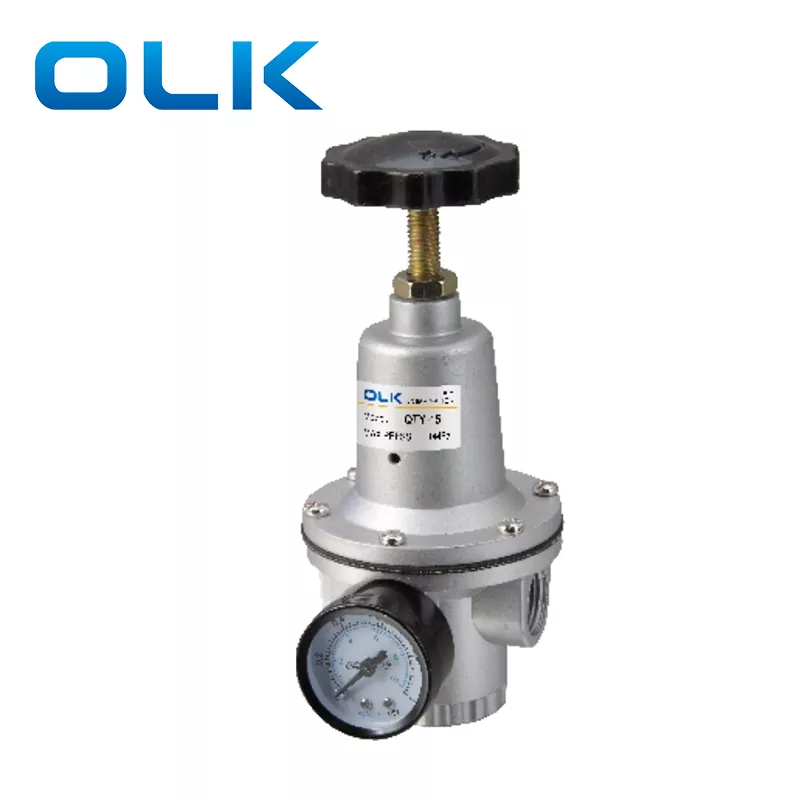
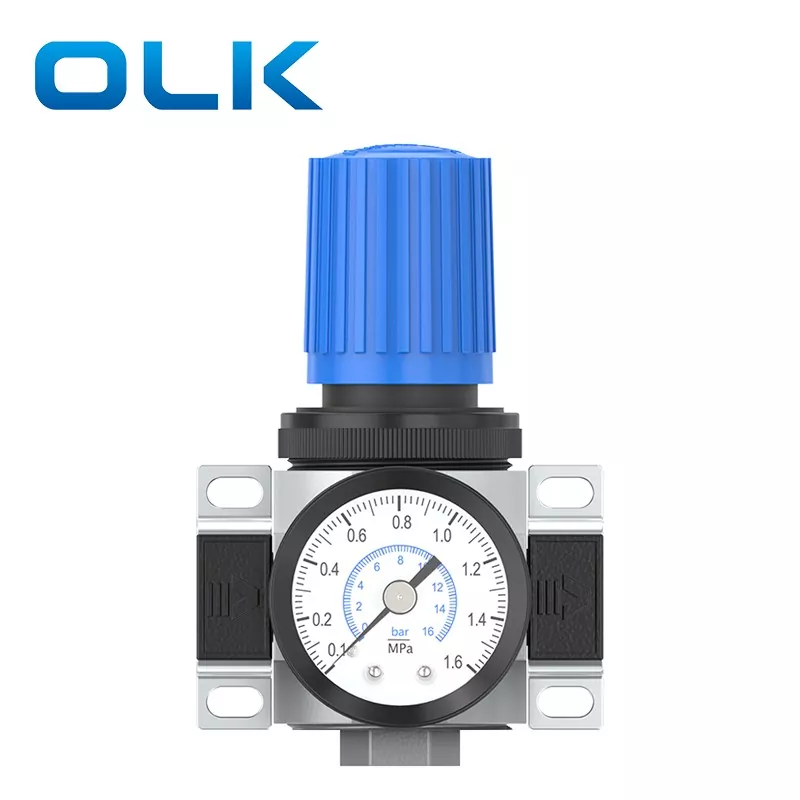
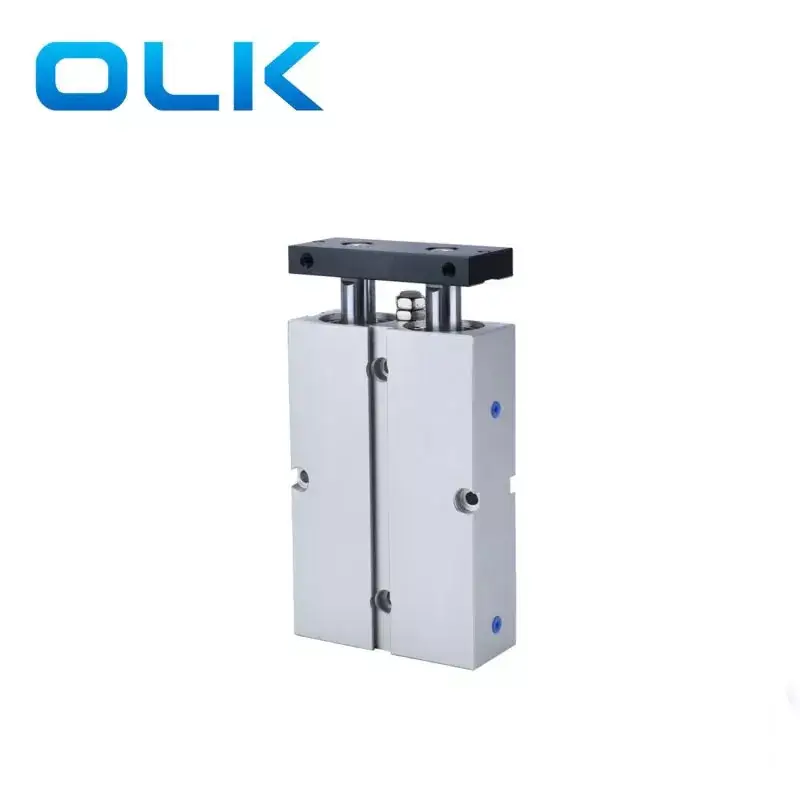
The Pressure Regulator features a sturdy and durable construction, ensuring that it can withstand even the toughest working conditions. It is made from high-quality materials that are resistant to corrosion, erosion, and rust, ensuring optimal performance and longevity.
The pneumatic element that regulates and controls the pressure is called a pressure control valve. It includes pressure reducing valve (pressure regulator), safety valve (overflow valve), sequence valve, pressure proportional valve, boosting valve and multi-functional combination valve.
The pressure regulator is a pressure control valve with adjustable outlet side pressure (but lower than inlet side pressure) and can maintain stable outlet side pressure.
The pressure regulator reduces the higher inlet pressure to the outlet pressure meeting the use requirements, and ensures the stability of outlet pressure after adjustment. Other pressure reducing devices (such as throttle valve) can reduce pressure but have no pressure stabilizing capacity. The pressure relief valve is pressure regulated, including direct-acting relief valve and pilot-operated relief valve. Common type and precision type according to pressure regulation accuracy. In addition, there are pressure reducing valves with composite functions integrated with other components, cartridge pressure reducing valves integrating multiple pressure reducing valves, pressure reducing valves for special fluids other than compressed air, etc
(1) Direct-acting pressure regulator
The air regulator that changes the outlet pressure of the regulator by directly adjusting the compression amount of the pressure regulating spring with the hand-wheel is called a direct-acting pressure regulator. Direct-acting pressure regulator include small, common (piston type, diaphragm type), high pressure type, precision type, etc.
(2) Piloted pressure regulator
The regulator that uses the force of compressed air to replace the force of pressure regulating spring to change the outlet pressure is called pilot pressure regulator. The air regulator features easy operation, good flow characteristics, high pressure stabilization accuracy and good pressure characteristics during pressure regulation, and is applicable to relief regulator with large diameter. The compressed air for pressure regulation of pilot pressure regulator is generally supplied by small direct-acting pressure regulator.
If the small direct-acting pressure regulator is integrated with the main regulator, it is called the internal pilot pressure regulator; If it is separated from the main regulator, the main regulator is called an external pilot pressure regulator, which can realize remote control. Internal piloted pressure regulator is available in common type, precision type and high flow type, and external piloted type is available in precision type
Summary
Direct-acting (direct-acting): the spring and diaphragm directly control the air regulator, which is simple in structure, fast in response, but with ordinary accuracy, suitable for low flow or cost sensitive applications.
Pilot-operated (pilot-operated/Pilot-activated): large main regulator is controlled by small regulator to provide higher accuracy and larger flow capacity, suitable for environment with high performance or stability requirements.
|
Actuation Type
|
Regulation Precision
|
Structure Type
|
Brand / Series
|
|
Direct-acting
|
Compact type
|
–
|
SMC (ARJ210 / 310 / 1020F)
|
|
Standard type
|
Piston type
|
SMC (AR10-60)
|
|
Standard type
|
Diaphragm type
|
AIRTAC (AR, GAR), FESTO (LR, MS)
|
|
High-pressure type
|
–
|
SMC (ARX20)
|
|
Precision type
|
–
|
SMC (ARP20, 30, 40)
|
|
Pilot-operated
|
External pilot – Standard type
|
–
|
SMC (AR)
|
|
External pilot – Precision type
|
–
|
SMC (IR)
|
|
External pilot – High flow type
|
–
|
–
|
|
External pilot – Precision type
|
–
|
SMC (IR)
|