Generally speaking, PU tube are installed on air compressors for gas transportation. Functionally speaking, it can also transport water and other liquids, but the corrosion resistance of PU pipes is not particularly strong.
Available equipment: pneumatic equipment, air compressor, pneumatic tools, air pump, air cylinder, cutting machine, spraying equipment, welding equipment, industrial robot, packaging machine, environmental control equipment, humidifier, dust removal equipment, ventilation system, spray system, cooling equipment. Laboratory and medical equipment: laboratory instruments, analyzers, medical gas equipment, air samplers. Vehicles and Machinery: Automotive Maintenance Equipment, Pneumatic Suspension Systems, Agricultural Machinery Automation Production Equipment: Assembly Lines, Conveyor Systems, Testing Equipment Other Equipment: Beverage Filling Machines, Food Processing Equipment, Balloon Inflators, Sandblasting Equipment .
PU air hose widely Used in Automation Equipment.
2.Common Materials for Pneumatic Tubing
PU(Polyurethane pipe)
PA(nylon tube)
PE(Polyethylene pipe)
Rubber tube
Braided reinforced hose
Ultra flexible tubing
PU flat hose
Features:
The most commonly used air hose, extremely flexible Good, smooth surface, low internal resistance.
High hardness, good rigidity, capable ofmaintain shape
Soft material, semi transparent, low cost.
Manufactured from natural or synthetic rubber and reinforced with a braided layer
PU or nylon tubing with an external braided reinforcement layer of polyester, aramid fiber, or stainless steel wire, offering improved pressure resistance and mechanical strength.
Using special materials and processes, the flexibility far exceeds that of ordinary PU pipes
The pipe body is flat, and multiple pipelines can be integrated in parallel.
Advantage
Good flexibility, wear resistance, torsion resistance, lightweight, easy to coil and install
High pressure resistance, high temperature resistance (up to 110 ° C), excellent oil and chemical resistance, and not easily oxidized
Cheap price, good low-temperature resistance, and corrosion resistance (acid, alkali).
Excellent elasticity, absorbs vibrations, and has strong weather resistance.
Extremely high pressure resistance (up to several times higher than ordinary pipes), anti expansion, and good pulse performance
Extremely soft, with a very small bending radius, resistant to repeated bending fatigue, and not easy to break knots。
Space saving, neat and beautiful, easy to manage multiple air sources, and prevent entanglement.
Disadvantage
The high temperature resistance performance is average (usually -10 ° C~+60 ° C), and the oil and chemical resistance is not as good as nylon pipes.
Poor flexibility, easily brittle at low temperatures, and requires a large space for bending installation.
Poor pressure resistance, not resistant to high temperatures, prone to aging, and weak wear resistance.
Extremely bulky, with high inner wall resistance and easy aging, plastic pipes have gradually replaced modern pneumatic systems.
The flexibility decreases, the bending radius increases, and the price becomes more expensive.
The price is usually higher, and the pressure resistance may be slightly lower than that of ordinary pipes of the same specification.
The bending direction is limited (can only bend towards the flat direction), and the price is relatively high
Typical applications:
The strongest universality, suitable for connecting the vast majority of pneumatic equipment, especially in situations that require frequent movement and bending, such as robotic arms and mobile devices
Fixed installation, where oil and temperature resistance are required, such as pipelines near machine tools, automotive manufacturing, and high-temperature equipment。
Suitable for low-pressure, temporary gas path connections, or for non critical areas such as water and agricultural irrigation. Less commonly used in pneumatic circuits for main circuits.
Mainly used for heavy equipment, construction machinery, and occasions that require great flexibility and vibration resistance.
Used in high-pressure pneumatic systems, air compressor outlets, long-distance main gas supply pipelines, and situations where pressure pulses are frequently generated。
The drag chain (Tank chain) inside the robot body, which undergoes high-frequency reciprocating motion, and equipment that requires extremely high flexibility.
A summary of the gas path for devices with multiple execution components, such as centralized piping from workstations, valve islands to actuators.
The Polyurethane tube (PU) Tube comes in four colors:
The Polyurethane tube (PU) Tube comes in four colors: blue, transparent, red, and blue. It is convenient for us to distinguish and connect the working tube in pneumatic devices. Specifically, it depends on the standard specifications of each company. For example, some companies require transparent tubes for vacuum, blue tubes for air inlet, and orange tubes for air outlet, in order to distinguish different pipelines and facilitate quick troubleshooting and positioning during air circuit maintenance.
3.How to Choose Pneumatic Polyurethane tube (PU) Tube Size used in cylinder?
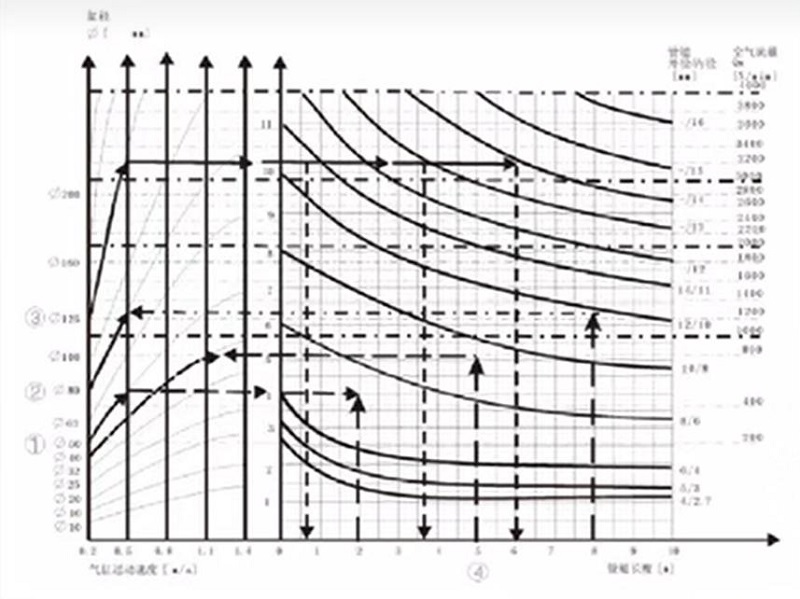
Firstly, we know that the size of the PU air hose can determine the flow rate. The larger the pneumatic tube, the stronger the flow capacity, which in turn affects the air cylinder's operating speed.
Strictly speaking, when making a choice, we need to include parameters such as stroke, number of runs per minute, cylinder diameter, etc. for calculation. However, based on relevant experience, different specifications of cylinders are recommended with corresponding specifications of air line tubing.
Reference and inspiration for the selection table of air cylinder diameter and PU air tube size
Air Cylinder bore size(mm)
Tube size (mm)
ɸ16
ɸ4
ɸ16-ɸ32
ɸ6
ɸ32-ɸ63
ɸ8
ɸ63-ɸ100
ɸ10
ɸ100
ɸ12
Precautions for PU tube/air hose selection
1. The main pipeline for valve operation can choose slightly larger pipes (which will not result in any additional air consumption, so there will be no additional costs incurred during operation).
2. However, the pipe between the valve and the cylinder should be optimized according to the following principles: if the pipe diameter is too small, it will throttle, thus limiting the speed of the cylinder; However, excessive pipe diameter can cause stagnation, thus increasing air consumption and filling time.
3. It is necessary to consider the bending radius, and it is very important to check the bending radius when using a drag chain.
4 .Working Pressure and Burst Pressure
PU tubing typically has a working pressure of around 10 kg/cm² at room temperature, although this may vary depending on size and model. For high-pressure applications, reinforced PU braided tubing is a better choice. It is constructed with a three-layer design—outer PU, middle polyester braided reinforcement, and inner PU—providing enhanced pressure resistance and durability. Additionally, this type of PU tubing is suitable for both air and water transfer.
Selection Principle:Burst pressure ≥ 3 × working pressure
5.Flexibility and Bend Radius
The flexibility of PU tubing plays a critical role in installation space and equipment movement, especially when different sizes such as 6mm and 8mm PU tubing are used. Smaller diameters like 6mm PU tube offer tighter bending radius, making them ideal for compact installations such as control panels or small automation systems where space is limited. In contrast, 8mm PU tubing provides higher airflow capacity and is commonly used in applications like pneumatic tools or larger machinery, where both flexibility and flow performance are required. In dynamic systems such as robotic arms or packaging machines, high-quality polyurethane tubing ensures smooth movement without kinking, improving efficiency and extending service life. Choosing the right size directly impacts system performance and installation efficiency.
Advantages of PU tube:
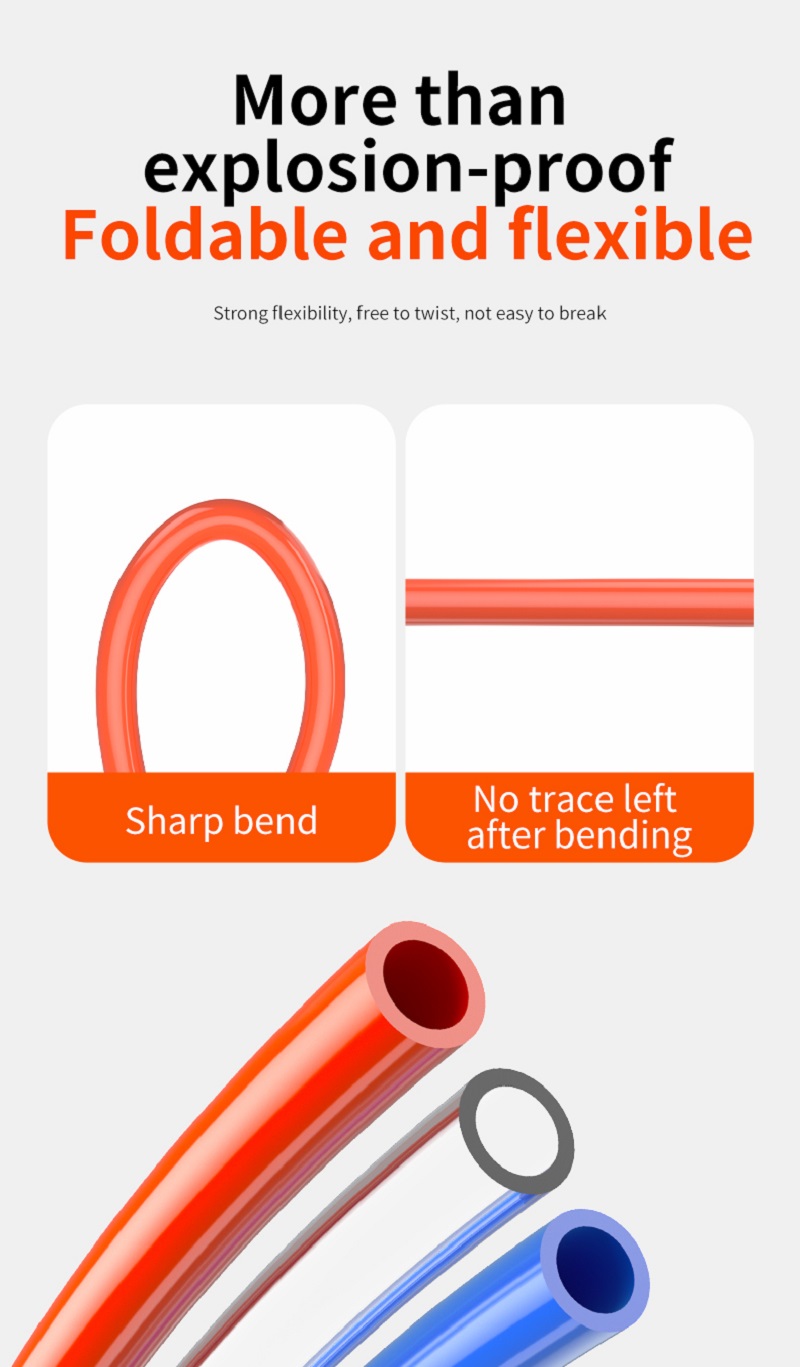
softer, resistant to bending, able to quickly rebound after bending, less prone to blockage during bending, specialized for automation systems, equipment routing without jamming
1: Hardness range of PU tube
The hardness of PU pipes is usually between 60A and 95A, depending on the material formula and application. The 60A PU tube is soft and easy to bend, suitable for scenes that require frequent movement; The 95A PU tube is harder and suitable for situations that require high pressure or long-term fixation. When choosing, it is necessary to balance flexibility and rigidity according to actual needs.
2: Factors affecting the hardness of PU pipes
①. Material ratio: The ratio of soft and hard segments in polyurethane directly affects hardness, and adjusting the ratio can change the characteristics of the pipe.
②. Additives: The addition of certain fillers or plasticizers can significantly alter hardness, such as the addition of silica, which can increase rigidity.
③. Production process: Process parameters such as extrusion temperature and cooling rate can also have subtle effects on the final hardness.
3、 How to choose the appropriate hardness for PU pipes
·Dynamic application: In frequent bending scenarios (such as mechanical arm gas supply), it is recommended to choose hoses ranging from 60A to 75A to avoid fatigue cracking.
·High pressure environment: It is recommended to use hard pipes with 85A or above when transporting high-pressure fluids to ensure compressive strength.
Wear resistance requirements: In situations where there is dragging or friction on the ground, a balanced hardness of around 80A is more ideal.
4: Four steps to teach you how to choose the right PU tube:
①. Check the hardness and identify 85-95A. In summer, the hardness of 98A is not easily softened at high temperatures; 95A hardness in winter, not easily hardened in cold winter. Too soft is easy to get angry; Too hard and prone to cracking
②. Pinch the tube wall evenly without any bubbles. If there is any hollow or concave hair when pinched, it is considered defective
③. Check the elasticity. After bending 90 degrees, it will rebound in seconds. If the rebound is slow and there are creases left, they should not be used
④. Check the inner diameter and select the corresponding specifications according to the equipment pressure. If the inner diameter is not correct, it will affect the power
6.PU Tube Installation and Usage Recommendations
With Air Compressors
Compressed air from compressors is high-temperature. Short-term use is fine, but long-term use can cause tube swelling or bursting. It is recommended to use with air tanks, coolers, and air filters.
In Auto Repair (Workshop) Environments
In workshops, PU tubes are frequently coiled, dragged, and may contact corrosive liquids. These factors can damage the tube surface, accelerate aging, and shorten service life. Replace tubes timely or use OLK high-pressure braided PU tubes.
For Indoor/Outdoor Spray Painting
Spray painting involves high temperatures, corrosive paints, and tube pulling under pressure, which can lead to bursting. Follow the tube pressure-temperature chart, keep pressure within safe limits, and consider using OLK high-pressure braided PU tubes.
7.FAQ about Pneumatic Tubing
Q1:What kind of joints can PU pipes be connected to?
Normal straight connections, bends, and tees can all be connected
Q2:Can the pneumatic tube be customized?
Yes, the color of the pneumatic tube and the markings on it can be customized
We use cookies to offer you a better browsing experience, analyze site traffic and personalize content. By using this site, you agree to our use of cookies.
Privacy Policy