SL Flow Control Valves: Complete Guide to Structure, Function, and Applications
2025-12-03
What is a one-way flow control valve?
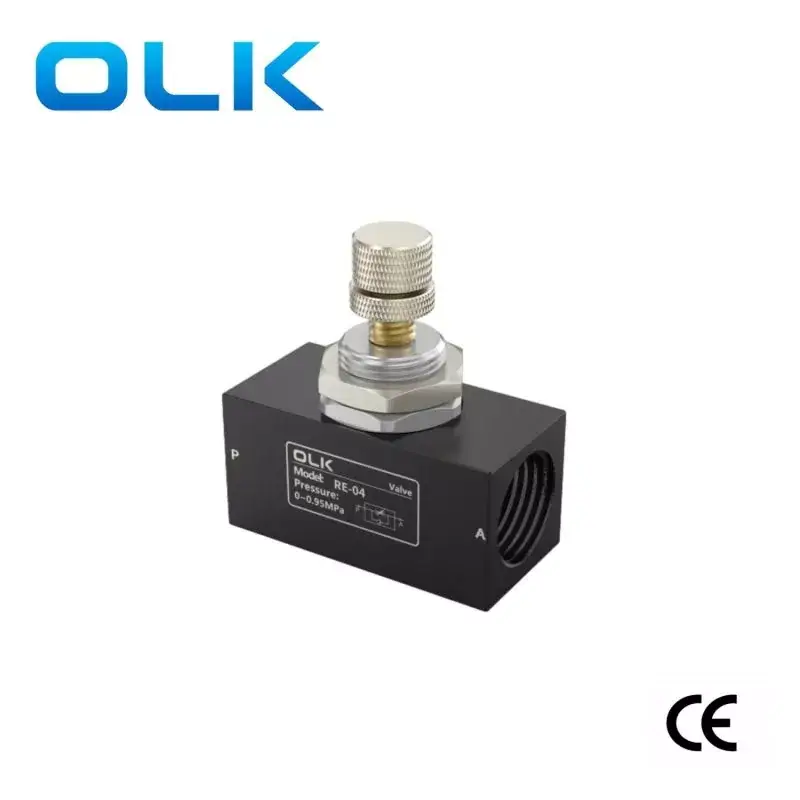
A one-way flow control valve is a flow control valve composed of a check valve and a throttle valve in parallel. It is commonly used to control the speed of a cylinder and is also known as a speed controller.
What is the working principle of an L-type speed controller?
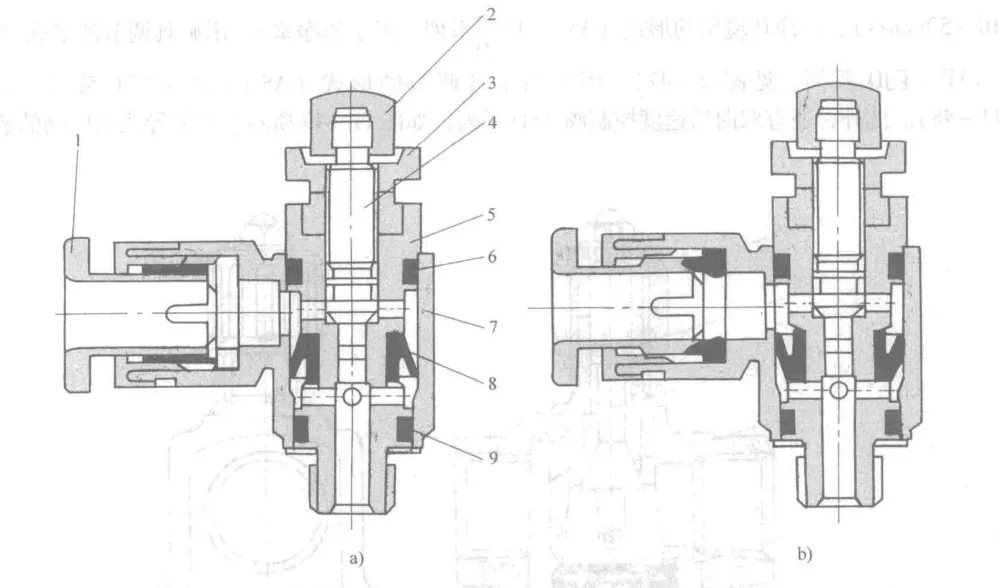
The SL flow control valve function is achieved through a one-way sealing ring. Photo (a) shows exhaust throttling, and photo (b) shows inlet throttling—the difference comes only from the installation direction of the sealing ring.
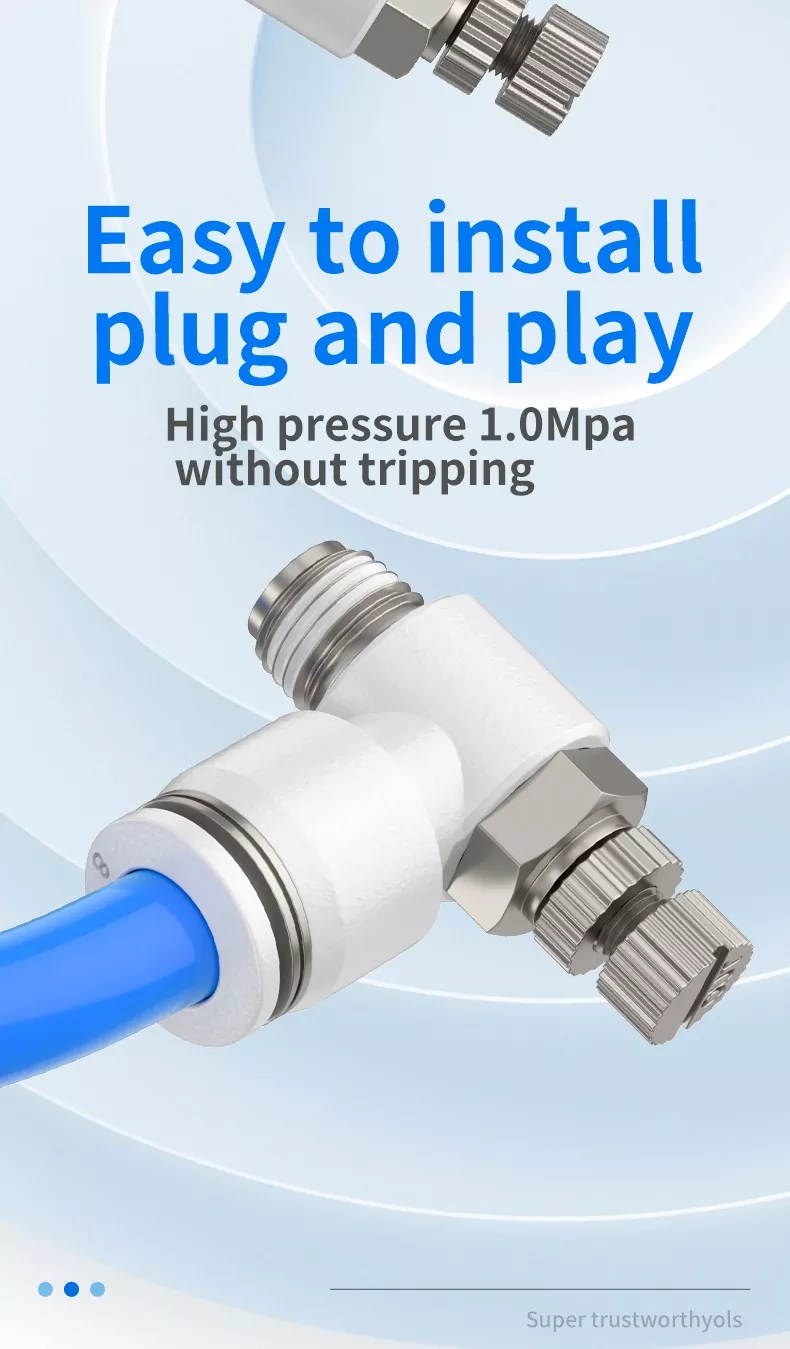
This valve is mounted directly on the cylinder, saving fittings, tubing, working time, and cost. With its swivel design, the piping direction can be freely adjusted after installation. The throttle valve is also equipped with a locking mechanism.
What are the features of the SL elbow-type flow control valve?
·It is a speed controller for actuators.
·All R and NPT threaded fittings use sealant for sealing.
·All straight threads use standard O-rings for sealing.
What are the different names and designations for SL pneumatic fittings?
Brand
Airtac
SMC
Festo
IMI/Norgren
CHELIC
CKD
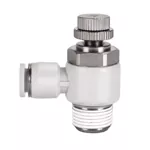
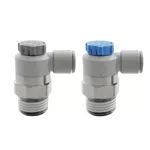
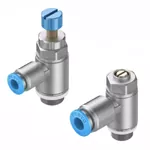
Photo
Out
PSL(A)
AS220(Grey knob)
GRLA
COTA(R thread) COK51(G thread)
QSC-A
ASL
In
PSL(B)
AS221(Blue knob)
GRLZ
COSA(R thread) COL51(G thread)
QSC-B
--
Name
1. Speed Controller
2. One-way Flow Control Valve
3. Unidirectional Flow Control Valve
4. Throttle Valve with Check Valve
5. Flow Regulator (with Check Valve)
6. Pneumatic Speed Regulator
What are the uses and applications of inlet and exhaust flow control valves?
Speed controllers are common pneumatic components used to adjust the extension and retraction speed of actuators. Throttle valves are essentially flow-adjusting components that control cylinder speed, but their installation positions, throttling directions, and body designs differ. According to the control method, they can be divided into exhaust-throttling type and inlet-throttling type.
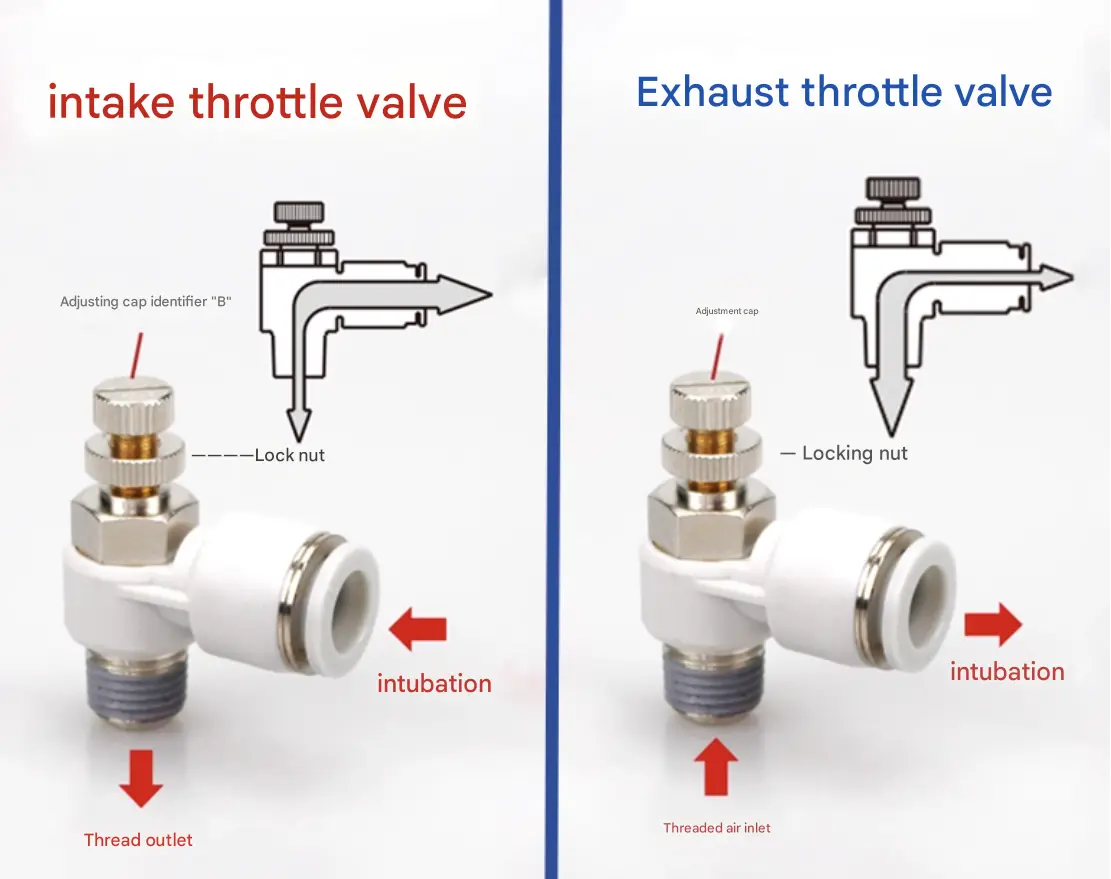
Difference between inlet and exhaust flow control valves:
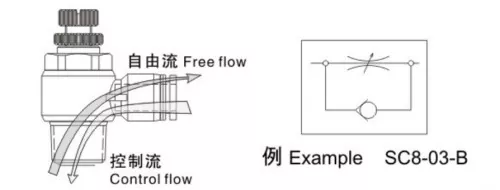
These are inlet and exhaust throttle valves, distinguished by the cap markings 'B' and 'OUT'. They can be used together: the inlet throttle valve adjusts the air supply flow, while the exhaust throttle valve controls the cylinder speed for more precise system control.
A throttle valve mainly consists of the valve body, valve core, adjustment device, and seals. The exhaust throttle valve’s adjustment part includes an adjustment wheel and a locking wheel. The inlet throttle valve looks similar externally, and both are adjusted by first loosening the locking wheel, turning the adjustment wheel to set the flow, and then tightening the locking wheel to fix it.
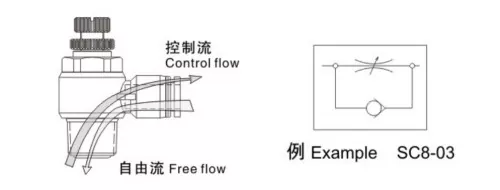
Inlet throttle valves take air in via tube and exhaust via threaded port; exhaust throttle valves take air in via threaded port and exhaust via tube.
SL-B (Intake throttle control)
SL (Exhaust throttle control)
Control the air that inflows from the fittings end. The air inflowing from thefittings end that outflows from threaded end is without restriction.
Control the air that inflows from the threaded end. The air inflowing from thefittings end that outflows from threaded end is without restriction.
From the functional symbols, we can see that both exhaust and inlet flow control valves are one-way throttle valves, controlling flow in only one direction while allowing reverse airflow to pass freely. For double-acting cylinders, exhaust throttle valves are preferred to improve cylinder movement stability. For single-acting cylinders, which usually use a spring for extension or retraction when there is no air supply, the gas must overcome the spring force during operation, so inlet throttle valves are suitable for speed control.
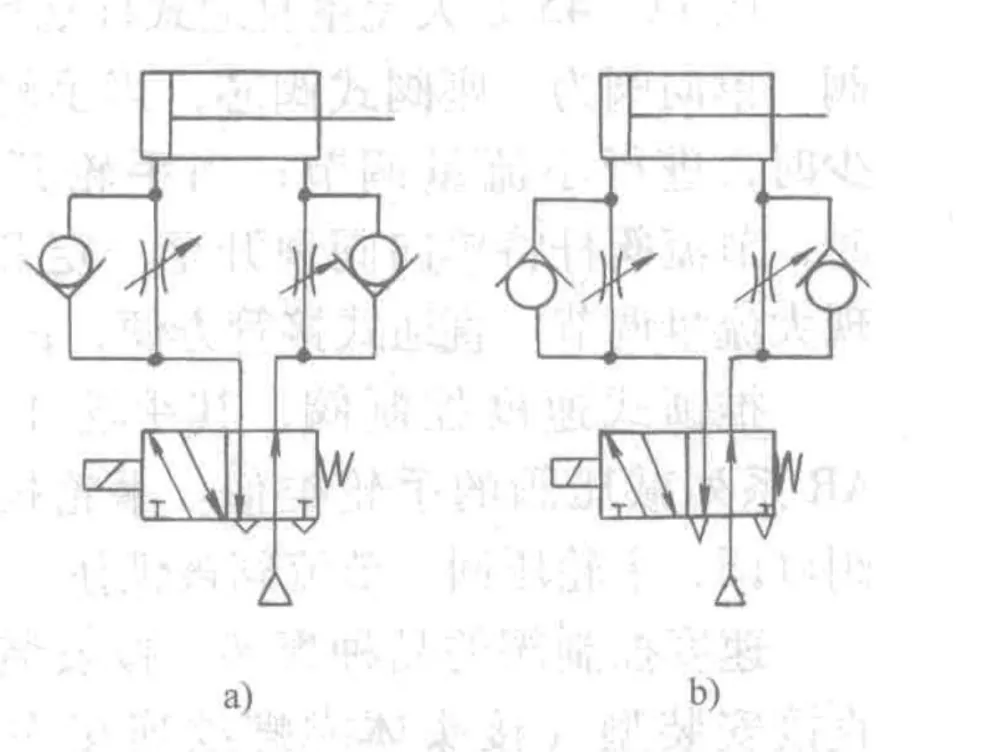
The diagram shows 2 ways to connect a speed control valve in a pneumatic circuit.
· In (a) (exhaust throttling), when the directional valve is energized, the check valve on the cylinder’s inlet side opens, allowing the rodless side to fill quickly. The air in the rod side can only exhaust through the throttle valve. By adjusting the throttle opening, the cylinder speed can be controlled. This method provides stable piston movement and is the most commonly used circuit.
· In (b) (inlet throttling), the inlet-side check valve is closed and the exhaust-side check valve is open. The inlet airflow is small, so the pressure in the inlet chamber rises slowly, while the exhaust chamber pressure drops quickly. The piston mainly moves by air expansion, making speed control unstable. This method is usually used only for single-acting cylinders, clamping cylinders, or low-friction cylinders.
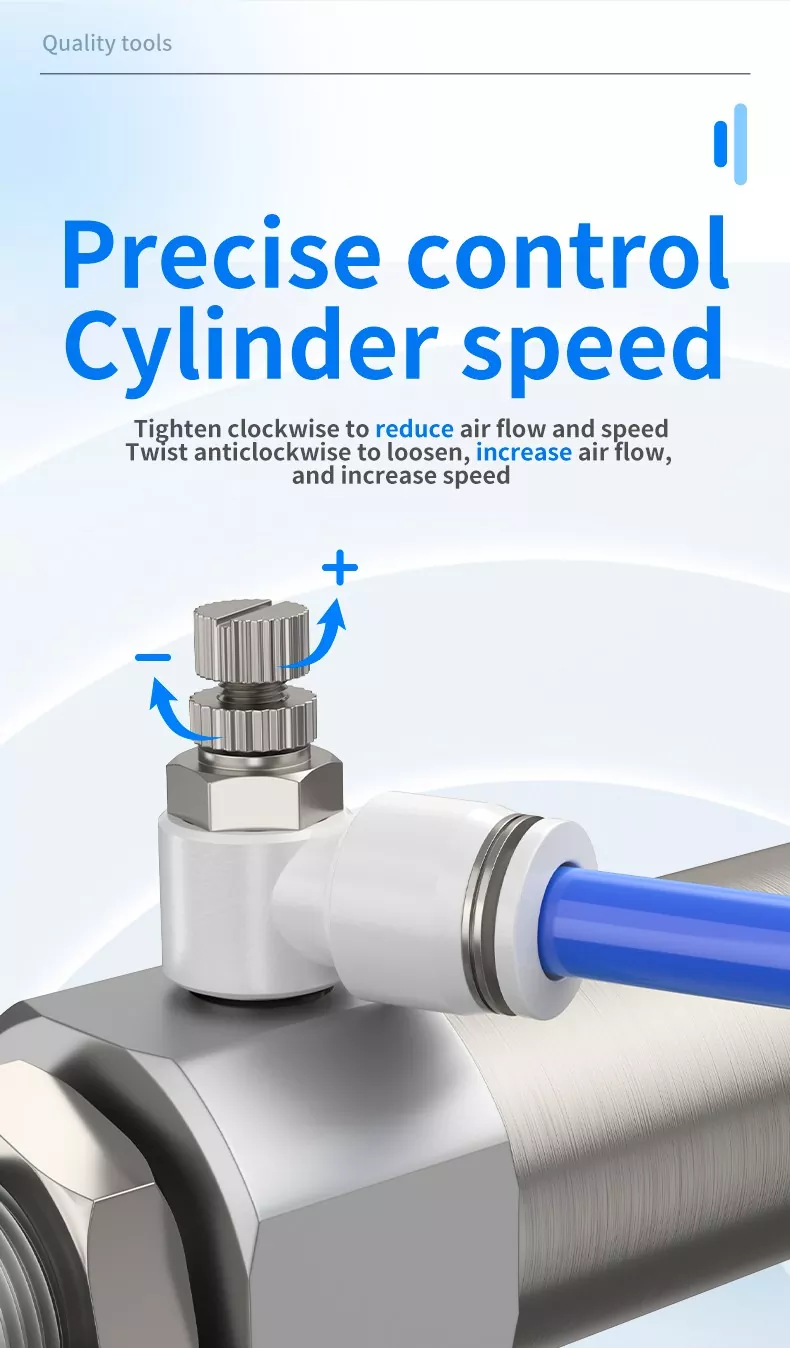
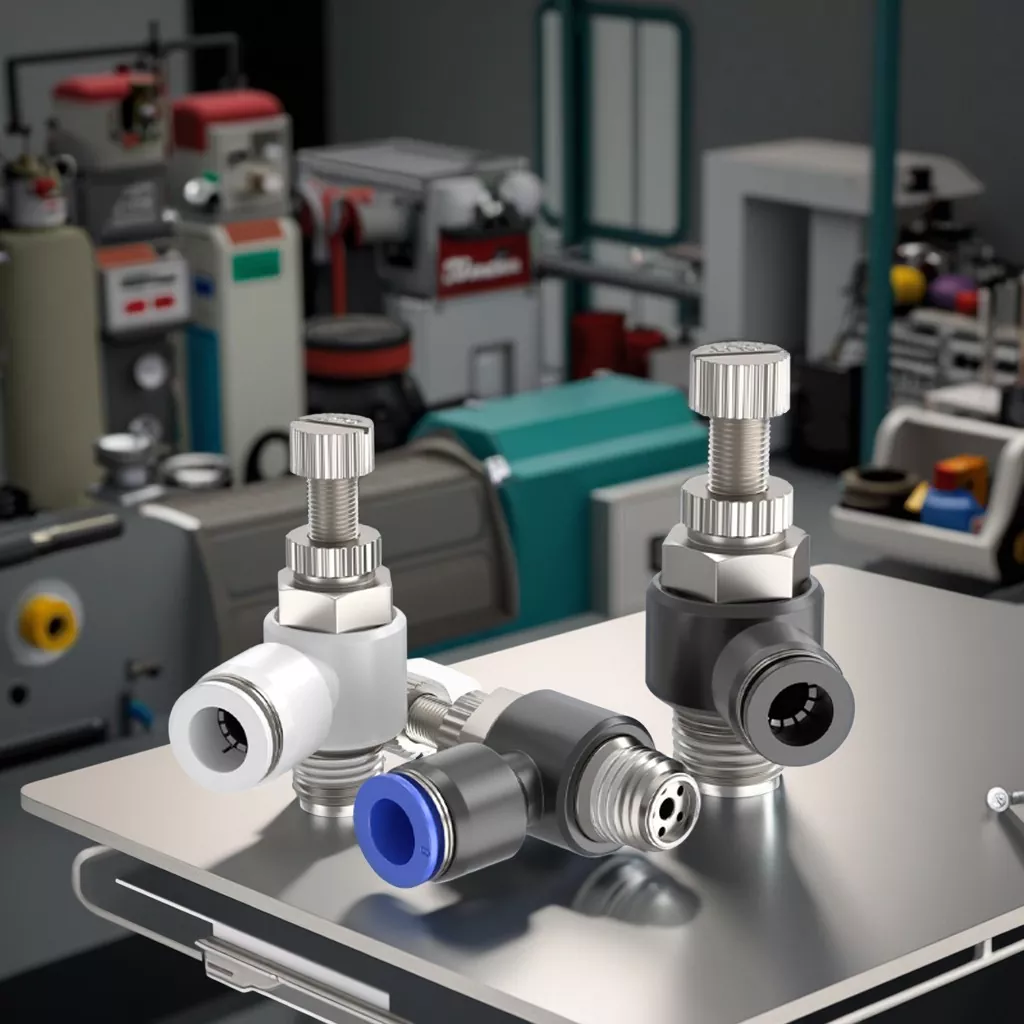
OLK SL series elbow-type flow control valves are high-quality pneumatic speed controllers designed for precise actuator speed regulation. With a simple yet reliable structure, each valve integrates a throttle mechanism and a one-way check valve, allowing controlled airflow in one direction while enabling free reverse flow.
Available in both inlet- and exhaust-throttling types, SL valves can be directly mounted on cylinders to save fittings, piping, and installation time. The swivel design allows flexible piping orientation, and the adjustment wheel with locking mechanism ensures fine and stable flow control.
Widely used in pneumatic automation, single- or double-acting cylinders, clamping cylinders, and low-friction cylinders, SL valves help improve cylinder performance, reduce cycle times, and optimize system stability. With OLK SL series, you get reliable, efficient, and easy-to-use speed control solutions for your pneumatic systems.
We use cookies to offer you a better browsing experience, analyze site traffic and personalize content. By using this site, you agree to our use of cookies.
Privacy Policy