Email Us
News

NBR, VITON, EPDM, or PTFE? How to Choose the Right Sealing Material for Your Solenoid Valve?

2025-12-10

Have you ever faced these problems with your pneumatic system?

The valve starts leaking air after just a few weeks.

The rubber seal swells and gets stuck.

The valve fails immediately when handling high-temperature fluids.

In 90% of cases, the valve quality is fine, but the sealing material is wrong. The seal is the "heart" of a solenoid valve. Choosing the right material can extend the lifespan of your equipment by millions of cycles.


At OLK Pneumatic, we offer five main types of sealing materials to match different industrial scenarios. Here is your simple guide to choosing the right one.

1. NBR (Nitrile Butadiene Rubber) – The Best Choice for air systems

Best for: Standard compressed air, Neutral gases, Mineral oils.

·Temperature: -20°C to 80°C.

·Cost-effective

NBR is the most common material in the pneumatic industry and factory automation. It has excellent resistance to oil and wear. Since most compressed air systems contain a small amount of lubricating oil mist, NBR is the perfect standard solution.


OLK Recommendation:

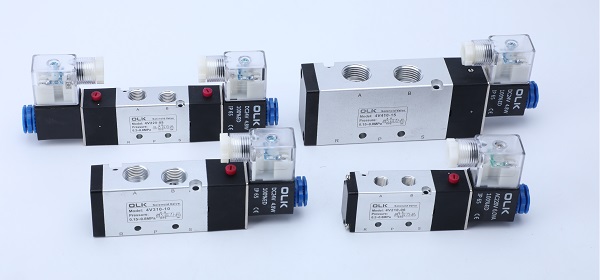
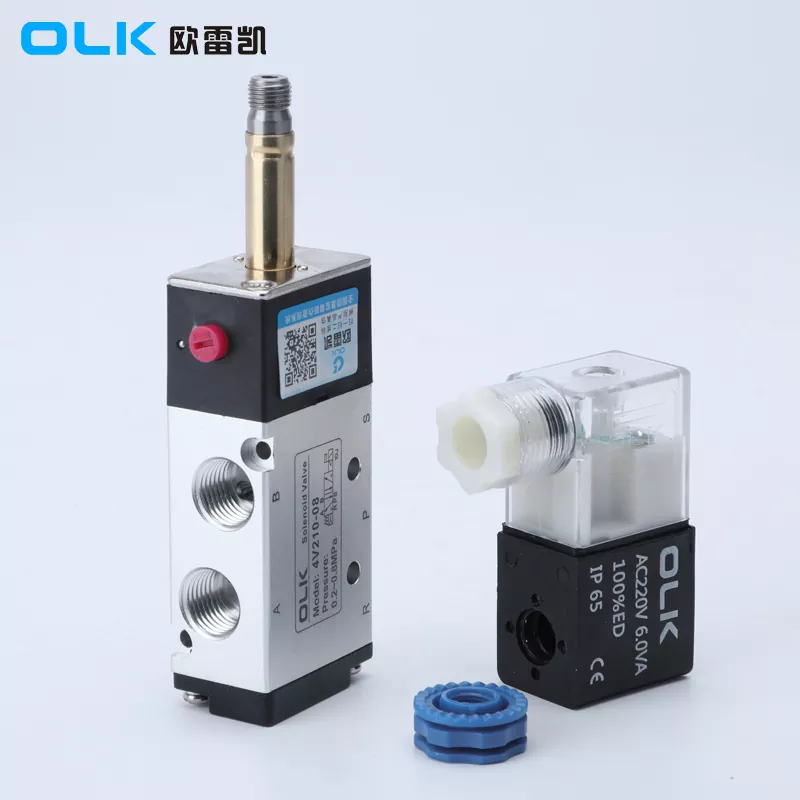
For general automation equipment, our standard 4V110/  4v210 / 4v310 Series Solenoid Valves and 3V Series Solenoid Valves come equipped with high-quality imported NBR seals. They offer stable performance and a long life cycle at a cost-effective price.

2.HNBR  --For High-Temperature Air and Oil-Rich Systems

Best for:oil-mist air systems,high-frequency industrial machines

·Temperature: -20°C to 80°C.


3. FKM / Viton (Fluoro Rubber) – High temperature and Chemical resistance

Best for: High temperatures, Chemicals, Corrosive fluids and Vacuum systems

·Temperature: -20°C to 180°C.

·High-Cost


If your working environment is very hot (e.g., near injection molding machines or engines), standard NBR seals will harden and crack. You need to upgrade to FKM. It costs more, but it withstands high heat and harsh chemicals effectively.

OLK Recommendation:

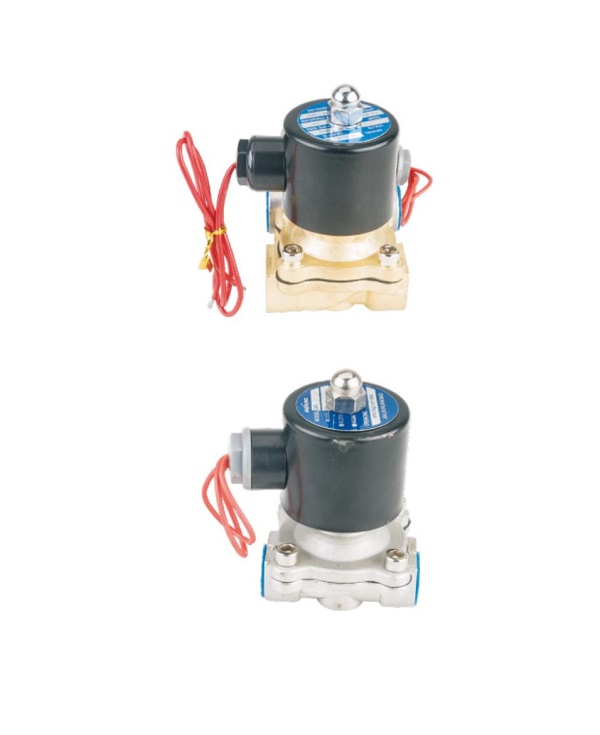
If you need a valve for a high-temperature application, please contact our team to customize your 2W Series Solenoid Valve with FKM seals.

4. EPDM (Ethylene Propylene) – The Hot Water & Steam Expert

Best for: Hot water, Low-pressure steam, Ketones.

·Temperature: -40°C to 130°C.

·Not suitable for oil

·Good against mild acid and alkali


EPDM is excellent for water systems. However, it has a fatal weakness: it is not compatible with oil. If your air compressor introduces oil into the system, EPDM seals will swell and fail. Therefore, we rarely use EPDM for standard pneumatic cylinders, but it is great for water pipelines.


5. PTFE (Teflon) – Best for corrosive Chemicals

Best for: High-temperature steam, Aggressive chemicals.

·Temperature: -200°C to 260°C.

·Excellent corrosion resistance


OLK Recommendation:

For steam control piping (textile or sterilization industries), our <u>Pneumatic Angle Seat Valve</u> and 2L Series Steam Solenoid Valve use PTFE seals to ensure reliability under extreme conditions.


6.Metal Sealing — For Extreme High-Temperature & High Pressure

Best for:High-pressure air,Foundry machines

·Temperature: up to 350°C.


Quick Selection Guide

Material Temperature Range Oil Resistance Chemical Resistance Applications
NBR –20°C to 80°C ★★★ Standard air systems
EPDM –30°C to 120°C ★★★ Hot water, steam
FKM –20°C to 200°C ★★★★ ★★★★ Chemical gas, vacuum
PTFE Up to 250°C ★★ ★★★★★ Strong acid, alkali
HNBR –20°C to 150°C ★★★★ ★★ High-frequency, oily air
Metal Seal Up to 350°C ★★ ★★ Steam, high pressure


How to Choose the Right Seal Material? --Choosing the right seal saves you money and maintenance time.

Need a standard valve for air cylinders? Stick with NBR.

Handling hot fluids or chemicals? Upgrade to FKM.

For corrosive chemicals? Go for PTFE.

For extreme steam & high pressure? Metal Seal

Still not sure which one to choose?

Contact OLK Pneumatic today. Our engineers will help you select the perfect valve for your project.


How to Measurement the sealing?

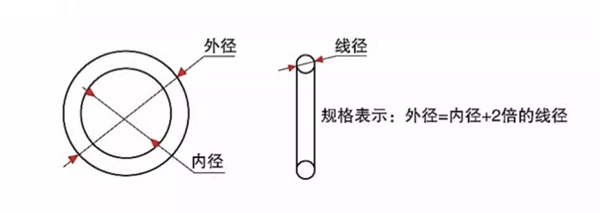
Specification: Outer diameter * Inner diameter * Cross-section (Unit: mm)


Specification Rule: Outer diameter = Inner diameter + 2 × Cross-section (Unit: mm)


Basic Rule for O-rings: Outer diameter × Cross-section (Cut-section diameter)


For Sealing Gaskets: Outer diameter × Inner diameter × Thickness (Coarse/Fine, Unit: mm)


How to deal with damaged seals?

Even when we choose the correct sealing material, the seal may still become damaged during actual operation.

In traditional Chinese medicine, doctors use “Look, Listen, Question, and Feel” to find the cause of illness.

Similarly, in pneumatic systems, we can also diagnose seal failures by following three steps:


Observe the failure phenomenon  →  Analyze the root cause →   Apply the correct solution


The table below explains the most common seal failures in pneumatic systems, their possible causes, and the recommended actions to solve the problem.


This helps users quickly identify the issue and choose the right corrective measures to keep the valve running safely and efficiently.

Failure Phenomenon Failure Cause Corrective Action
Extrusion Pressure too high Avoid excessive pressure
Excessive clearance Redesign the clearance
Groove mismatch Redesign the groove
Poor installation condition Reinstall properly
Aging Temperature too high Replace with better seal material
Hardening at low temperature Replace with better seal material
Natural aging Replace
Twisting (Spiral Failure) Lateral load Remove lateral load
Surface Damage Abrasion wear Check air quality, seal quality, and surface finish
Poor lubrication Identify cause and improve lubrication
Swelling Incompatible with lubricant Change lubricant or seal material
Adhesion / Deformation 1. Excessive pressure Check operating conditions, installation size, method, and seal material
2. Poor lubrication — (same corrective action applies)
3. Improper installation — (same corrective action applies)

Related News
E-mail
cici@olkptc.com
Mobile
+86-13736765213
Address
Zhengtai Road, Xinguang Industrial Zone, Liushi, Yueqing, Wenzhou, Zhejiang, China.
X
We use cookies to offer you a better browsing experience, analyze site traffic and personalize content. By using this site, you agree to our use of cookies. Privacy Policy
Reject Accept